
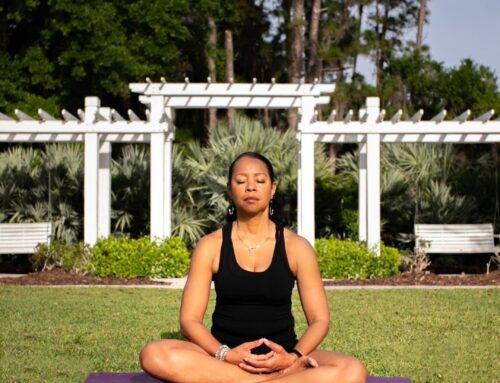
One of the most natural and important aspects of fitness is breathing. Breathing is something you do subconsciously. Unless there are some physical restrictions to taking a breath, such as the common cold, breathing is often taken for granted. Many people have worked out for years but pay little attention to how they breathe. Controlling your breathing pattern can calm you, reduce stress, and retain energy, therefore, improve your overall wellness. Even if you are not yet on a fitness program, focusing on breathing is a very significant first step. Whether working out, driving, or watching the children, there is an advantage to breathing properly.
Now, stop reading and take a deep breath. (Breathe). Notice what happens to your body as you take a breath. (Breathe). If you lifted your chest and shoulders, or you arched your back during the inhalation, you could probably learn to breathe much more efficiently.
Put your hands on your ribcage right below your chest with your fingers loosely interlaced. Inhale, and this time, try to expand your ribcage laterally without puffing your chest out. Your fingers should slightly separate. When you exhale, empty as much air as possible before taking the next inhalation. Your belly button will go in as you exhale.
Many smokers have mastered this concept. If a smoker could resist putting deadly toxins in their body (quit smoking), but maintain the ritual of taking a break and simply enjoy the act of breathing, it would be of great benefit. Perhaps that is what fuels the addiction and complicates the habit of smoking. The very act involves a ritual humans are born to do: breathe. Everyone should take breaks during the day and appreciate a few full and complete inhalations and slow, controlled exhalations.
Athletes are trained to exhale when a movement requires the most strength. When you inhale, muscles tense, when you exhale the muscles relax. When kicking a football, dunking a basketball, or hitting a powerful tennis serve, for example, the athlete is programmed to exhale. The exception is for sports like competitive weightlifting, when athletes are required to maintain full strength for a longer period of time. They are trained to hold their breath for added stability, during the exertion portion of the lift. This technique is done at a cost. It can often elevate blood pressure and is not good for the body. Therefore, for functional fitness, always breathe while exercising.
Learn the fundamental movement pattern of an exercise first, and then focus on how you are breathing. When doing a bicep curl, for example, sit or stand with your chest lifted and shoulders back. Keep your pelvis neutral, careful not to arch your back. Inhale. As you exhale, bend your elbows and bring your hands toward your shoulders. Inhale as you lower. Try to maintain fluid, controlled movements. Continue the repetitions until you complete a set of twelve.
Always remember to consult your healthcare provider before beginning any exercise regimen. And don’t forget to breathe.




Leave A Comment