
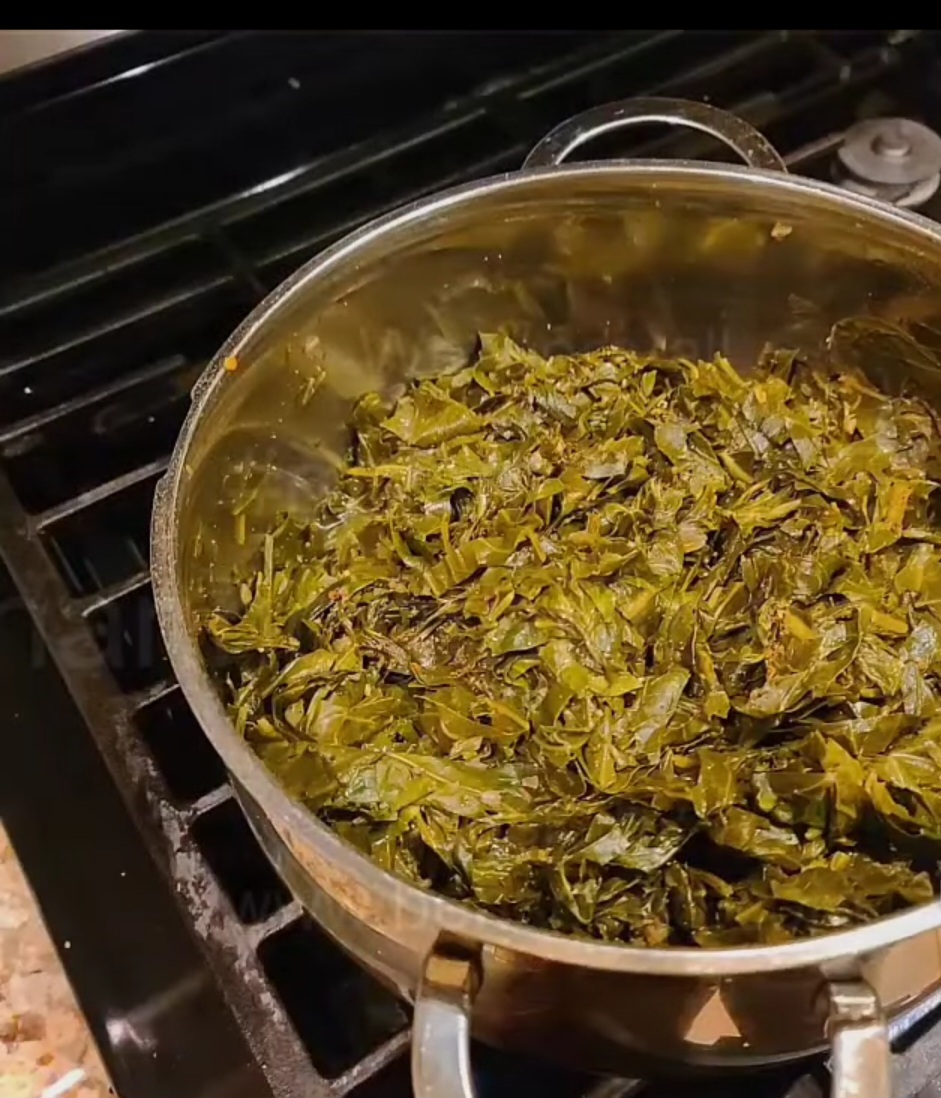
I grew up watching my grandmother make collard greens without measuring a thing — just layering flavor, patience, and care. I’ve adapted her method to be fully vegan while keeping the heart of the recipe intact.
 Gently steamed, not boiled
 Cooked low and slow
 Five bunches of greens, layered with flavor
 Full ingredients + method linked below.
Ingredients (for a large pot)
- 5 bunches of collard greens
- Vegetable broth (about 1 quart total, added gradually — you may use less)
- Black pepper Red pepper flakes
- Lawry’s Seasoning Salt (to taste)
- Vegetable oil (a light drizzle, up to about ¼ cup total)
- Sugar (about ¼ to ½ cup for a large pot, added to taste)
- Vinegar (a splash, to finish)
No exact measurements — this is a feel-based recipe, just like Grandma made it.
Method
Add a small amount of vegetable broth to a large pot and bring it to a gentle simmer over low heat.
As you prepare the greens, stack several leaves at a time, cut or tear out the thick center rib, then roll the leaves tightly like a cigar.
Slice into thin strips. Add the greens to the pot as you slice them, allowing each batch to wilt and cook down before adding more.
Keep the heat low and add just enough broth as needed to prevent sticking or scorching. This is a steaming/braising process — not boiling.
As the greens cook, season gradually with black pepper, red pepper flakes, and Lawry’s Seasoning Salt, tasting as you go.
Once all the greens are in the pot, cover loosely and cook on low, stirring occasionally, until fully tender.
Near the end of cooking, add the sugar to balance the bitterness, followed by a splash of vinegar to brighten the flavor.
Finish with a light drizzle of vegetable oil, stir well, and adjust seasoning if needed.
The result is tender, soulful collard greens — deeply seasoned, comforting, and rooted in tradition.



Leave A Comment